



Artificial intelligence is moving beyond simple automation and becoming an active part of how modern organizations operate. Today, smart AI agents can analyze information, complete repetitive tasks, communicate with digital systems, and support employees across multiple departments. Businesses are increasingly exploring wave tech solutions to build workplaces that are faster, more responsive, and better prepared for complex challenges. These technologies are changing the relationship between people and software by creating intelligent systems that can understand goals and take meaningful actions.
Unlike traditional workplace software, AI agents are designed to work with greater independence. They can follow instructions, access approved data, recognize patterns, and suggest or perform actions based on business needs. From customer service and marketing to finance and operations, organizations are finding new ways to use intelligent agents. As workplace demands continue to evolve, the combination of human expertise and advanced AI is creating a more flexible model for productivity.
Understanding Smart AI Agents in the Workplace
Smart AI agents are software systems that can perform tasks with a certain level of autonomy. Instead of simply following one fixed command, they can interpret objectives, process available information, and decide which steps are required to complete a task. An AI agent may organize data, draft content, monitor workflows, answer questions, or coordinate multiple digital tools.
The value of these systems lies in their ability to reduce unnecessary manual work. Employees often spend significant time searching for information, updating records, creating routine reports, and managing repetitive processes. AI agents can support these activities and allow people to focus on strategic thinking, creativity, and relationship building.
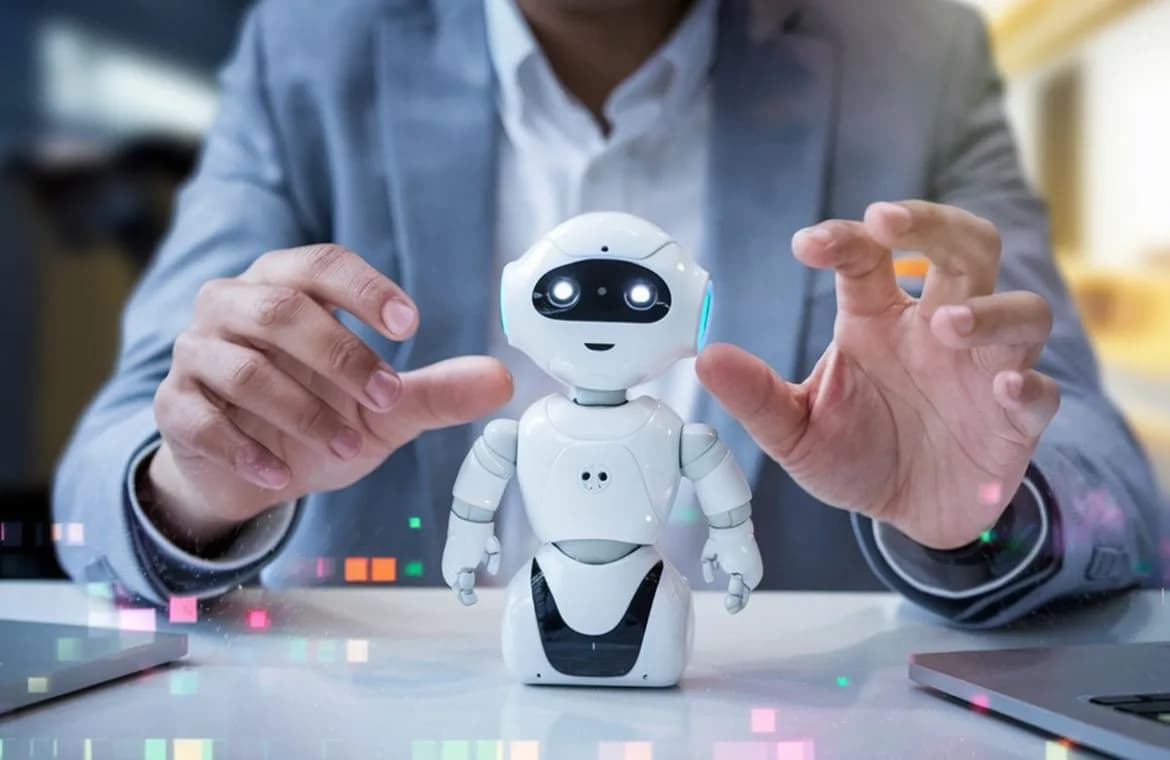
Modern wave tech approaches are helping businesses connect AI capabilities with practical workplace systems. The goal is not simply to automate everything. Instead, organizations can identify tasks where intelligent assistance creates the greatest value while keeping human judgment at the center of important decisions.
What Makes AI Agents Different from Basic Automation
Traditional automation generally follows predefined rules. For example, a workflow may automatically send an email when a form is submitted. Smart AI agents can work more dynamically by responding to different situations and interpreting changing information.
Key capabilities can include:
- Understanding natural language instructions
- Analyzing large amounts of workplace information
- Planning multi-step tasks
- Interacting with connected software tools
- Recognizing patterns and unusual activity
- Providing recommendations based on context
- Learning from feedback and approved data
This flexibility makes AI agents useful for modern workplaces where tasks are not always predictable. A single employee request may involve several applications, documents, and business processes. An intelligent agent can help connect these activities and reduce the time required to move information from one stage to another.
How AI Agents Are Improving Daily Productivity
One of the strongest benefits of AI agents is their ability to improve productivity without forcing employees to work harder. Many workplace processes contain small tasks that individually require only a few minutes but collectively consume hours every week. Searching for documents, summarizing meetings, responding to common questions, and updating databases are examples of activities that can be supported by intelligent technology.
Businesses adopting wave tech systems can design smarter workflows around employee needs. For example, an AI agent could collect information from several internal sources and prepare a summary before a team meeting. Another agent could monitor a project and notify managers when deadlines appear to be at risk.
The technology can also provide more consistent support throughout the workday. Instead of employees repeatedly switching between applications to find answers, they may be able to interact with an intelligent assistant that brings relevant information together. This can reduce digital friction and make complex systems easier to use.
Productivity Areas Where AI Agents Can Help
| Workplace Area | AI Agent Capability | Potential Benefit |
|---|---|---|
| Customer Support | Responds to routine questions | Faster service and reduced workload |
| Human Resources | Organizes employee information | More efficient administrative processes |
| Marketing | Analyzes content and campaign data | Better planning and personalization |
| Finance | Monitors transactions and reports | Improved accuracy and faster insights |
| Project Management | Tracks tasks and deadlines | Better coordination across teams |
| Operations | Identifies workflow delays | Stronger process efficiency |
The most effective implementations are usually focused on real business problems rather than technology for its own sake. Companies should identify where employees lose time, where information becomes difficult to manage, and where repetitive decisions create bottlenecks.
Transforming Customer Service with Intelligent Agents
Customer expectations are increasing across almost every industry. People want faster responses, personalized communication, and consistent service regardless of when they contact a company. Smart AI agents can support customer service teams by handling routine requests and preparing useful information for human representatives.
An intelligent agent might identify the purpose of a customer request, search approved knowledge sources, and provide an appropriate response. When a situation requires human expertise, the agent can transfer the conversation while including relevant background information. This prevents customers from repeating the same details and helps employees understand the issue more quickly.
Organizations using wave tech strategies can also use AI to examine patterns in customer interactions. If many people are asking similar questions, the business can identify possible problems with products, services, or communication. AI agents therefore do more than respond to customers. They can also provide valuable insights that help companies improve the overall customer experience.
AI Agents and Better Business Decision-Making
Modern workplaces generate enormous volumes of data. Sales information, customer feedback, financial records, operational reports, and employee activity can all contain useful insights. However, having access to information does not automatically lead to better decisions. Businesses need efficient ways to interpret data and understand what matters.
Smart AI agents can help by analyzing information and presenting important findings in a more accessible format. A manager may ask an agent to summarize performance changes, identify unusual trends, or compare current results with previous periods. This can reduce the time between data collection and decision-making.
The growing influence of wave tech is particularly visible in organizations that want real-time intelligence. Instead of waiting for weekly reports, decision-makers can receive alerts when specific conditions occur. For example, an operations manager could be notified about an unexpected delay, while a sales leader could receive an alert about changes in customer behavior.
AI should not replace leadership judgment, but it can provide decision-makers with clearer and faster access to relevant information.
From Data Overload to Actionable Insights
AI agents can help organizations turn complex data into useful workplace intelligence through several steps:
- Collecting information from approved systems
- Cleaning and organizing relevant data
- Detecting patterns and changes
- Comparing results with established goals
- Generating summaries for different teams
- Highlighting potential risks or opportunities
This approach can make information more useful for employees who do not have advanced data analysis skills. Instead of manually building complicated reports, they can ask questions in natural language and receive understandable responses.
Supporting Collaboration in Hybrid Workplaces
Hybrid and remote work have changed how teams communicate and share information. Employees may work from different locations, time zones, and schedules. While digital collaboration tools make communication possible, they can also create information overload.
Smart AI agents can help organize this environment. They can summarize long discussions, prepare meeting notes, track action items, and identify important updates. Employees can spend less time searching through messages and more time completing meaningful work.
Through wave tech, organizations can create more connected digital workplaces where information moves efficiently between people and systems. An AI agent could prepare a project summary for a team member who was unavailable during a meeting. It could also organize related documents and identify the next steps based on the discussion.
These capabilities are particularly useful when teams are large or geographically distributed. However, businesses should carefully establish privacy rules and define which information AI systems can access.
Improving Employee Experience Through AI Assistance
Employee experience is becoming an important factor in business performance. Workers want tools that simplify tasks rather than create additional complexity. When employees must use too many disconnected applications, productivity and satisfaction can suffer.
AI agents can create a more natural interaction between employees and workplace technology. Rather than remembering where every piece of information is stored, an employee may be able to ask an intelligent assistant for help. The system can search approved resources and provide a useful answer.
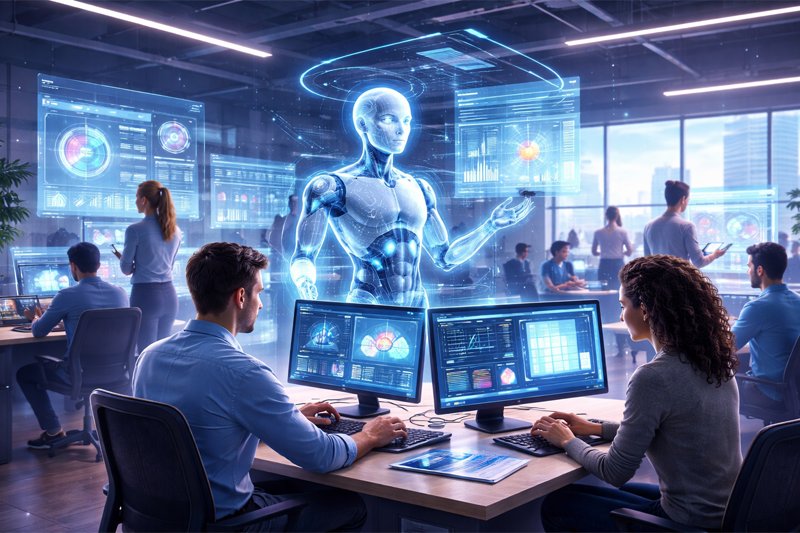
A well-designed wave tech environment can also support personalized assistance. Different departments have different workflows, and employees often need information based on their specific responsibilities. AI agents can provide context-aware support while following organizational access controls.
The best employee experience comes from balance. AI should reduce complexity without removing employee control. Workers need to understand when they are interacting with an AI system, how recommendations are generated, and when human oversight is required.
Building Secure and Responsible AI Workflows
As AI agents gain access to workplace systems, security and responsible use become essential. Organizations must carefully manage what information an AI agent can access and what actions it is allowed to perform. A powerful system without proper controls can create unnecessary risks.
Businesses should establish clear governance policies before deploying intelligent agents at scale. Access permissions should be limited to what is necessary for each task. Sensitive information should receive additional protection, and important automated actions may require human approval.
Responsible AI strategies should include:
- Clear access and permission controls
- Protection of sensitive business data
- Human oversight for high-impact decisions
- Regular monitoring of AI performance
- Transparent workplace policies
- Testing before large-scale deployment
- Processes for correcting errors
Successful wave tech implementation depends on trust as much as technical performance. Employees and customers are more likely to accept AI systems when organizations clearly explain how they are used and maintain strong accountability.
The Future of Human and AI Collaboration
The future workplace is unlikely to be entirely automated. Instead, it will increasingly combine human strengths with intelligent digital capabilities. Humans remain essential for creativity, empathy, leadership, ethical judgment, and complex decision-making. AI agents can support these strengths by handling repetitive analysis and operational tasks.
As wave tech continues to develop, AI agents may become more specialized. Businesses could use different agents for finance, marketing, operations, customer service, and project coordination. These systems may work together while remaining connected to a broader workplace strategy.
The role of employees will also evolve. Instead of spending all day managing routine digital tasks, workers may increasingly focus on directing AI tools, evaluating outputs, solving complex problems, and building stronger relationships.
Organizations that prepare their workforce for this transition will be better positioned to gain long-term benefits. Training employees to work effectively with AI should become an important part of digital transformation.
Conclusion
Smart AI agents are transforming modern workplaces by making everyday systems more intelligent, responsive, and useful. They can automate repetitive tasks, organize information, improve customer service, support collaboration, and provide faster business insights. The greatest opportunity comes from using AI as a practical partner rather than viewing it as a complete replacement for human workers. A thoughtful wave tech strategy can help organizations build smarter workflows while maintaining security, accountability, and human oversight. Businesses that focus on real workplace challenges can create AI solutions that improve productivity without adding unnecessary complexity.
The modern workplace is entering a new stage of digital transformation. Smart AI agents will continue to reshape how teams work, communicate, and make decisions. Companies that combine advanced technology with responsible implementation and strong human skills will be better prepared for a future where intelligent systems play an increasingly important role in everyday business success.