


Technology is moving beyond simple digital convenience and becoming deeply connected with how people work, communicate, shop, learn, and solve problems. In 2026, several innovations are moving from experimental concepts toward practical applications. Artificial intelligence, autonomous systems, advanced computing, cybersecurity, connected devices, and immersive experiences are all influencing the next stage of digital development.
For wave tech readers, understanding these changes is important because today’s emerging technologies can quickly become tomorrow’s everyday tools. Businesses are adopting smarter software, consumers are purchasing increasingly intelligent devices, and developers are creating applications that can respond to users with greater context. At the same time, concerns surrounding privacy, security, energy consumption, and responsible technology are becoming more important.
Rather than focusing on one breakthrough, 2026 is about the convergence of multiple technologies. AI can work with robotics, edge computing can support connected devices, and stronger cybersecurity can protect increasingly automated digital environments.
Artificial Intelligence Is Becoming More Autonomous
Artificial intelligence remains one of the biggest technology trends of 2026, but its role is changing. Instead of simply responding to individual prompts, newer AI systems are increasingly designed to complete sequences of tasks, analyze information, make recommendations, and work with different digital tools.
This shift is particularly important for businesses. An AI system could potentially organize information, prepare a report, identify an issue, and recommend the next action without requiring a person to manage every individual step. This does not eliminate human involvement, but it changes where people spend their time.
For wave tech readers, the important development is the movement from basic generative AI toward more useful and task-oriented systems. AI is becoming less like a standalone chatbot and more like a digital assistant integrated into software, websites, productivity platforms, customer service systems, and business processes.
AI-Powered Devices Are Moving Toward the Edge
Cloud computing has traditionally handled much of the processing behind modern applications. However, edge computing is becoming increasingly important as devices become smarter and require faster responses.
Edge technology allows some processing to happen closer to where data is generated. Smartphones, cameras, industrial machines, vehicles, sensors, and other connected devices can analyze information locally instead of sending every piece of data to a distant server.
This can improve responsiveness and may reduce unnecessary data transfers. It is especially useful when applications need quick decisions or operate in environments where reliable connectivity is limited.
Why Edge AI Matters
The combination of artificial intelligence and edge computing could make connected products considerably more capable. Smart cameras can analyze scenes, industrial sensors can detect unusual activity, and consumer devices can perform certain AI functions without depending entirely on cloud services.
For wave tech audiences, edge AI is worth watching because it connects powerful software with everyday physical products.
Robotics Is Becoming More Intelligent
Robotics is another major area receiving attention in 2026. Traditional robots have generally performed predefined actions in controlled environments. Newer systems are increasingly designed to understand surroundings, respond to changing conditions, and make decisions with greater independence.
This development is sometimes described as physical AI because intelligence is being combined with machines that can interact with the physical world.

Robots are being explored for manufacturing, warehouses, logistics, healthcare support, agriculture, inspection, and other demanding environments. The goal is not necessarily to replace every human task. Instead, robots can be useful for repetitive, dangerous, physically demanding, or highly precise work.
The next generation of robotics will depend on improvements in sensors, computer vision, processors, software, batteries, and AI models working together.
Quantum Computing Continues Its Long-Term Rise
Quantum computing remains an emerging technology rather than a replacement for ordinary computers. Instead of using conventional bits in the same way as classical machines, quantum systems use quantum properties to approach certain computational problems differently.
The technology has potential applications in areas such as materials research, chemistry, optimization, and scientific simulation. However, significant engineering challenges remain, including error correction, reliability, scalability, and practical application development.
For wave tech readers, the key point is that quantum computing should be viewed as a long-term technological shift rather than a technology expected to replace laptops or smartphones overnight.
Its development is also encouraging organizations to think about future encryption requirements. Preparing digital infrastructure for a potential quantum era is becoming part of long-term cybersecurity planning.
Cybersecurity Is Becoming More Intelligent
As technology becomes more automated, cybersecurity becomes increasingly important. Attackers can use automation and artificial intelligence to create sophisticated threats, while defenders can use similar technologies to detect suspicious behavior and respond faster.
Modern security strategies are therefore moving beyond simple password protection. Organizations increasingly need multiple layers of identity verification, access controls, monitoring, encryption, threat detection, and automated response.
For consumers, basic security habits remain valuable:
- Use strong and unique passwords.
- Enable multi-factor authentication whenever possible.
- Keep software and operating systems updated.
- Avoid suspicious attachments and messages.
- Review permissions granted to applications.
- Back up important information regularly.
The growth of AI makes cybersecurity a particularly important trend for wave tech readers because smarter digital systems also create new opportunities for misuse.
Connected Devices Will Become More Useful
The Internet of Things continues to expand as more physical products gain sensors, connectivity, and software. Smart home products are only one part of this broader development.
Connected technology is increasingly appearing in factories, transportation, agriculture, healthcare, energy management, and retail. Sensors can collect information about temperature, movement, equipment condition, energy consumption, and other variables.
The next step is making that information useful. Instead of simply collecting data, intelligent systems can analyze it and provide recommendations or trigger automated actions.
| Technology | Main Development in 2026 | Potential Benefit |
|---|---|---|
| AI | More autonomous systems | Faster decision-making |
| Edge Computing | Local data processing | Lower latency |
| Robotics | AI-powered machines | Greater automation |
| Quantum Computing | Advanced research and experimentation | New computational possibilities |
| Cybersecurity | AI-assisted protection | Faster threat detection |
| IoT | Smarter connected devices | Better automation |
| Spatial Computing | More immersive digital environments | Improved interaction |
Spatial Computing Will Change Digital Interaction
Digital experiences are becoming more immersive through augmented reality, virtual reality, mixed reality, and spatial computing. Instead of interacting with digital information only through a traditional screen, users can increasingly engage with virtual objects and information within their surrounding environment.
Potential applications extend beyond entertainment. Education can use immersive simulations, companies can visualize designs in three dimensions, and training programs can recreate environments that would otherwise be expensive or dangerous.
The long-term potential of spatial technology will depend on comfortable hardware, useful software, realistic interaction, and affordable devices. As these elements improve, immersive computing could become a more practical part of everyday digital experiences.
Smarter Chips Will Support the AI Boom
The growth of AI depends heavily on computing hardware. Modern applications require powerful processors capable of handling increasingly demanding workloads while managing energy consumption.
This is driving innovation in CPUs, GPUs, AI accelerators, specialized processors, memory technologies, and advanced chip designs. Devices are also becoming more capable of performing AI workloads locally.
For wave tech readers, semiconductor development may not always be visible, but it is one of the foundations behind faster phones, smarter computers, autonomous machines, and AI-powered applications.
Better hardware can allow developers to build more capable software while improving performance and efficiency.
Sustainable Technology Will Gain More Attention
Technology growth also brings environmental challenges. Data centers, connected devices, semiconductor manufacturing, and AI workloads can require substantial energy and infrastructure.
As a result, efficiency is becoming an important part of technology development. Companies are exploring better cooling systems, energy-efficient processors, renewable energy integration, smarter power management, and computing architectures designed to reduce unnecessary resource consumption.
Sustainable technology is not limited to environmentally friendly hardware. Software efficiency matters too. Applications that use computing resources intelligently can reduce processing requirements and improve device performance.
This means future technology will increasingly be judged not only by what it can do, but also by how efficiently it can do it.
AI and Humans Will Work More Closely
One of the most significant changes in 2026 is the changing relationship between people and intelligent software. Rather than treating AI as a separate technology, businesses are increasingly integrating it into existing workflows.
A designer might use AI for early concepts, a developer might use it to analyze code, a marketer might use it for research, and a business analyst might use it to identify patterns in large datasets. Human judgment remains essential for evaluating results and making important decisions.
The strongest applications will likely combine machine speed with human creativity, experience, accountability, and critical thinking.
For wave tech readers, this is perhaps the most practical trend of all: learning how to work effectively with intelligent tools may become just as valuable as knowing how to operate traditional software.
What These Trends Mean for Everyday Users
Technology trends can sound futuristic, but many of them are already influencing ordinary digital experiences. Smartphones are becoming more intelligent, software increasingly includes AI features, connected products are becoming common, and security systems are becoming more sophisticated.
Users do not need to become experts in every emerging technology. Instead, it is useful to understand how new tools affect privacy, productivity, cost, security, and convenience.
A practical approach is to focus on technologies that directly relate to your work or lifestyle. Someone working with data may benefit from AI tools, while a business owner may prioritize automation and cybersecurity. Students may find immersive learning and AI-powered research particularly useful.
The Future of Technology Is About Convergence
The most important technology story of 2026 is not one individual invention. It is the way different technologies are beginning to work together.
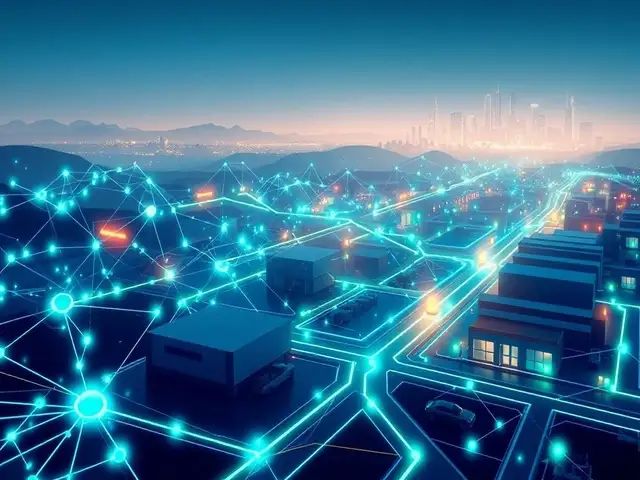
AI can provide intelligence, edge computing can provide rapid local processing, IoT can collect information, robotics can act on that information, and cybersecurity can help protect the entire ecosystem. Advanced chips provide the computing foundation underneath many of these systems.
This convergence creates opportunities for new products and services that would have been difficult to build only a few years ago.
For wave tech readers, following technology therefore means looking beyond individual gadgets and asking how different innovations connect with one another.
Conclusion
The latest technology trends of 2026 show a clear movement toward smarter, more autonomous, connected, and efficient digital systems. Artificial intelligence is becoming more capable, robotics is gaining greater independence, edge computing is bringing intelligence closer to devices, quantum computing continues its development, and cybersecurity is becoming increasingly essential. At the same time, sustainable computing, advanced chips, spatial experiences, and connected devices are shaping the infrastructure behind tomorrow’s digital world. The biggest opportunity is not simply adopting every new technology. It is understanding which innovations provide genuine value and learning how to use them responsibly. For wave tech readers, staying informed about these developments can make it easier to recognize useful opportunities, prepare for technological changes, and make smarter digital decisions throughout 2026 and beyond.