
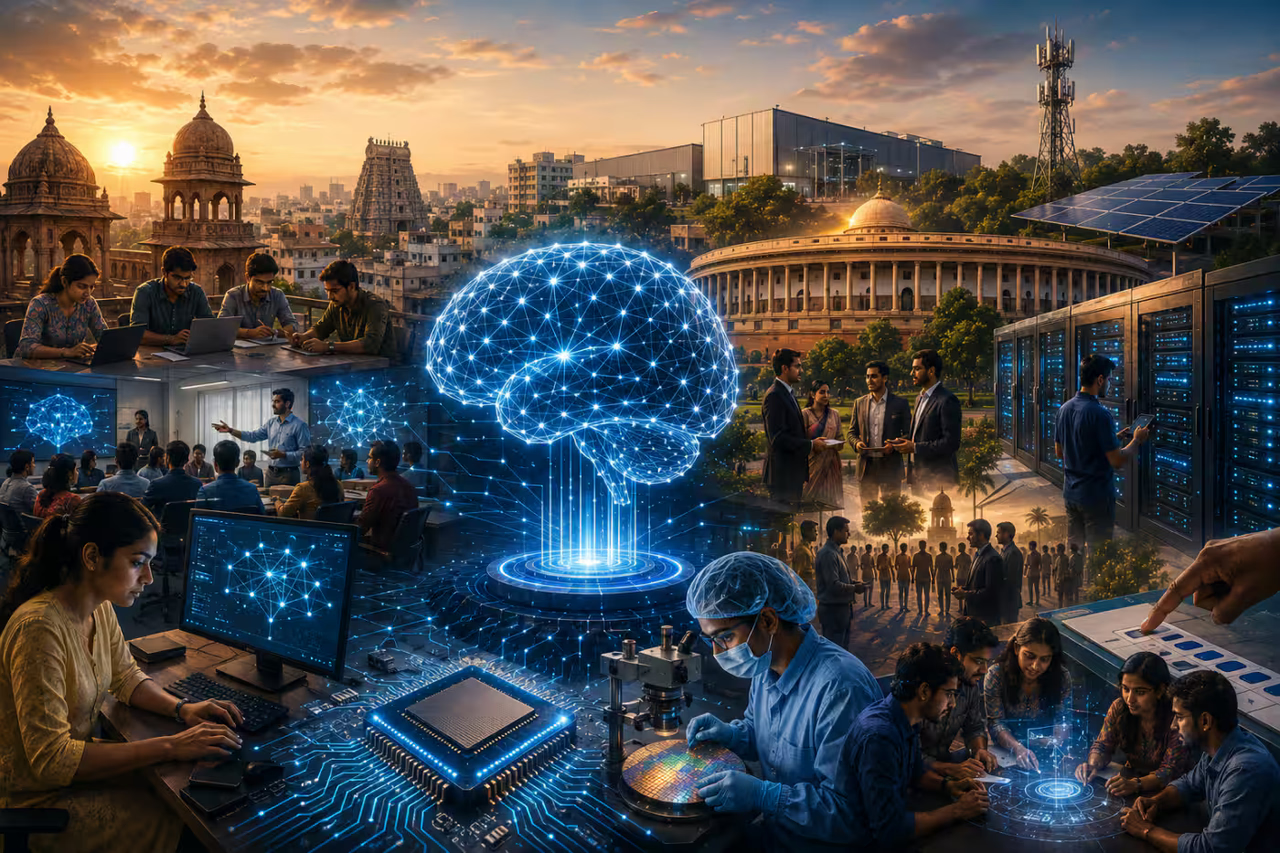


Artificial intelligence has moved beyond being a futuristic concept and become an important part of modern digital transformation. Businesses, developers, and technology teams are increasingly using AI to automate repetitive work, analyze large datasets, improve customer experiences, and support faster decisions. The biggest change is not simply the ability to generate text or images; it is the growing integration of intelligent systems into everyday digital processes. Wave Tech represents this broader movement toward smarter, more adaptive technology that can respond to changing business and consumer needs.
Modern AI applications are becoming more practical because they can connect data, software, automation, and human decision-making. Instead of operating as isolated tools, AI systems can increasingly become part of larger workflows. This creates opportunities across industries, from intelligent customer support and predictive analytics to cybersecurity and personalized digital services.
Why Emerging AI Applications Matter
The value of emerging AI applications comes from their ability to transform information into useful action. Traditional software generally follows predefined instructions, while AI-powered systems can identify patterns, interpret language, generate recommendations, and adapt to different situations.
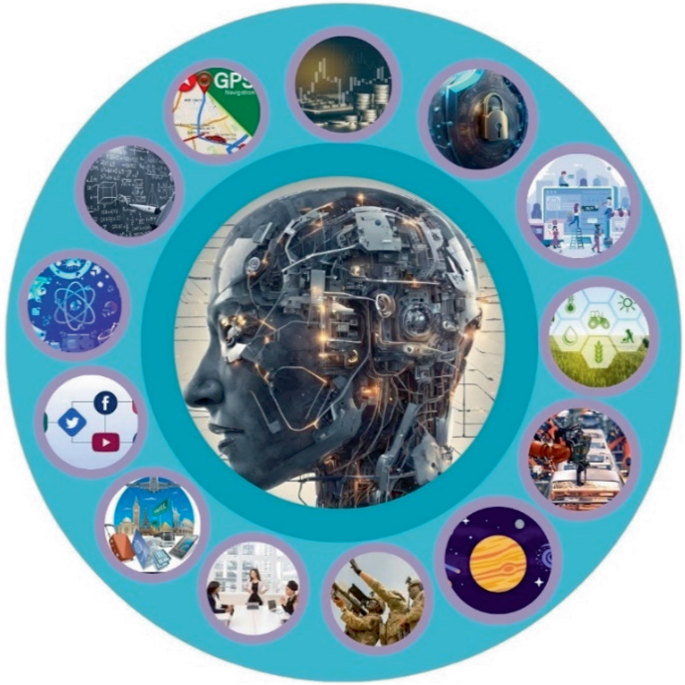
This distinction is particularly important for organizations handling large volumes of information. AI can help teams identify trends faster, prioritize important tasks, and reduce the amount of manual analysis required. As businesses move from experimentation toward production-level AI, the emphasis is increasingly shifting toward measurable outcomes, integration, governance, and long-term value.
AI Is Moving Into Everyday Workflows
One of the most important developments is the integration of AI directly into business applications. Rather than requiring employees to open a separate AI tool, intelligent capabilities can appear inside customer relationship systems, productivity platforms, financial software, development environments, and operational dashboards.
This approach makes AI more useful because employees can access assistance within the context of their existing work. Wave Tech is part of a technology landscape where intelligent features are becoming less visible as standalone products and more important as underlying capabilities within digital platforms.
Key AI Applications Shaping Digital Transformation
| AI Application | Primary Use | Potential Benefit |
|---|---|---|
| Generative AI | Content and idea creation | Faster production |
| AI Agents | Multi-step task execution | Workflow automation |
| Predictive Analytics | Forecasting and planning | Better decisions |
| Computer Vision | Image and video analysis | Automated inspection |
| Natural Language AI | Text and voice understanding | Improved interaction |
| Cybersecurity AI | Threat detection | Faster response |
| Personalization AI | User recommendations | Better experiences |
AI Agents and Autonomous Workflows
AI agents are emerging as one of the most significant developments in enterprise technology. Unlike basic chatbots that mainly answer questions, agents can be designed to plan tasks, interact with software, retrieve information, and complete multiple steps toward a defined objective.
For example, an AI agent supporting a sales team could examine customer information, summarize previous interactions, prepare a draft proposal, and identify appropriate follow-up actions. A logistics agent could monitor inventory information and flag potential supply problems before they become serious.
The future importance of these systems will depend on reliable data, appropriate permissions, human oversight, and strong governance. Automation can create major efficiencies, but organizations still need clear boundaries around what AI systems can decide and execute independently.
Smarter Customer Experiences
Customer experience is another major area where AI applications are developing rapidly. Intelligent assistants can understand natural language, analyze customer history, and provide more contextual responses than traditional scripted systems.
Retail businesses can use AI to recommend products based on preferences and previous interactions. Financial platforms can provide personalized insights. Travel services can help customers organize complex plans. Digital support systems can identify common issues and direct users toward appropriate solutions.
The goal is increasingly moving beyond simply answering questions. Advanced systems can help customers discover products, compare options, complete routine tasks, and receive personalized recommendations without navigating complicated menus.
Personalization at Scale
Personalization was once difficult to achieve because companies needed large teams to analyze individual customer behavior. AI changes this equation by processing huge amounts of behavioral and transactional data quickly.
AI-powered recommendation systems can identify patterns that may not be obvious to human analysts. When responsibly implemented, these systems can create more relevant digital experiences while helping businesses understand what customers actually need.
AI-Powered Cybersecurity
As digital activity increases, cybersecurity threats are becoming more complex. AI provides another layer of defense by continuously examining network activity, system behavior, login patterns, and other signals for unusual activity.
Instead of relying entirely on static security rules, intelligent security systems can identify deviations from normal behavior. This can help security teams investigate suspicious events more quickly and prioritize incidents that deserve immediate attention.
Some important applications include:
- Detecting unusual account activity
- Identifying suspicious network behavior
- Prioritizing security alerts
- Analyzing potential fraud
- Supporting incident response
- Monitoring applications for abnormal behavior
However, AI should complement rather than replace security professionals. Attackers can also use AI, making continuous monitoring, testing, and human oversight essential.
Healthcare and Intelligent Decision Support
Healthcare is another field where AI applications have significant potential. Intelligent systems can assist with medical imaging, administrative workflows, research, patient communication, and data analysis.
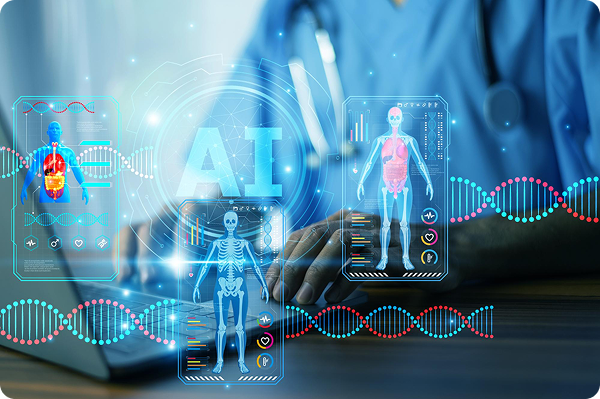
For example, computer vision can help analyze medical images, while language-based systems can organize large collections of clinical information. Predictive models may also help healthcare organizations identify operational patterns and improve resource planning.
The most valuable applications are likely to be those that support professionals rather than attempting to remove human judgment from sensitive decisions. Accuracy, privacy, transparency, and regulatory compliance are especially important when AI is used in healthcare environments.
AI in Manufacturing and Smart Operations
Manufacturing is becoming increasingly connected through sensors, robotics, cloud platforms, and intelligent analytics. AI can bring these technologies together by analyzing operational data and identifying potential problems.
Predictive maintenance is a strong example. Instead of waiting for equipment to fail, an AI system can analyze sensor readings and historical patterns to identify signs of potential equipment problems. Maintenance teams can then investigate before an unexpected breakdown interrupts production.
AI can also support:
- Quality control
- Demand forecasting
- Inventory optimization
- Production scheduling
- Visual inspection
- Energy management
This creates a more responsive operating environment in which businesses can make decisions based on real-time information.
AI and Software Development
Software development is undergoing its own transformation. AI coding assistants can help developers generate code, explain unfamiliar functions, identify potential errors, create tests, and accelerate documentation.
The role of developers is therefore evolving rather than simply disappearing. Human professionals remain responsible for architecture, security, product requirements, testing, quality, and technical judgment.
Wave Tech reflects this shift toward software environments where intelligent assistance is embedded throughout the development lifecycle. The long-term opportunity lies in combining human creativity with AI-supported execution rather than treating AI as a complete replacement for engineering expertise.
AI for Predictive Business Intelligence
Businesses have always relied on historical data, but AI makes it possible to extract more complex insights from increasingly diverse datasets. Predictive analytics can help organizations estimate demand, identify potential risks, understand customer behavior, and improve resource allocation.
For example, a retailer could analyze historical sales, seasonal patterns, inventory levels, and customer behavior to improve purchasing decisions. A transportation company could study traffic and operational data to improve route planning.
The competitive advantage comes not simply from having more data but from turning that data into timely and actionable information.
The Role of Responsible AI
Rapid AI adoption also creates important responsibilities. Organizations need to consider privacy, security, bias, transparency, data quality, and human oversight before deploying intelligent systems at scale.
A successful AI strategy should include:
- Clear objectives and measurable outcomes
- Reliable and well-managed data
- Human review for sensitive decisions
- Strong access controls
- Regular model evaluation
- Employee AI training
- Defined accountability
Responsible implementation can help organizations build trust while reducing operational and reputational risks.
How Wave Tech Can Shape the Next Digital Phase
The next stage of digital transformation will likely involve AI becoming less of a separate technology category and more of an embedded layer across digital infrastructure. Applications will increasingly understand context, predict needs, automate workflows, and interact with other software systems.
Wave Tech can be viewed within this larger transformation toward intelligent digital ecosystems. The most valuable technology will not necessarily be the system with the most impressive features. Instead, successful AI solutions will be those that solve meaningful problems, integrate effectively with existing infrastructure, and produce reliable results.
Organizations should therefore evaluate AI according to business needs rather than adopting technology simply because it is new. A focused AI application that saves employees several hours each week may deliver more value than an ambitious system with limited practical use.
The Future of AI Applications
Emerging AI applications are likely to become increasingly multimodal, contextual, automated, and personalized. Systems will combine text, voice, images, structured data, and real-time signals to create richer digital experiences.
AI agents may also become more capable of coordinating complex workflows. Meanwhile, edge AI could allow certain intelligent functions to operate closer to devices and users, potentially improving responsiveness and privacy.
The future will also require stronger AI governance. As intelligent systems gain greater influence over business operations, organizations will need clear policies governing access, accountability, monitoring, and human intervention.
Wave Tech is aligned with this broader direction in which AI becomes a foundational component of modern digital experiences rather than a temporary technology trend.
Conclusion
Artificial intelligence is reshaping the digital era by moving intelligence directly into applications, workflows, products, and services. From autonomous agents and predictive analytics to cybersecurity, healthcare, manufacturing, personalization, and software development, emerging AI applications are creating new ways to solve problems and improve digital operations. The most important opportunity is not simply automation. It is the ability to combine machine intelligence with human expertise to make faster, more informed, and more adaptable decisions. Businesses that focus on practical use cases, strong data foundations, responsible deployment, and measurable results will be better positioned to benefit from this transformation.
As the digital landscape continues to evolve, Wave Tech represents the growing momentum behind intelligent technology that can make digital systems more responsive, connected, and useful. The future of AI will ultimately belong to solutions that combine innovation with reliability—and ambition with real-world value.