
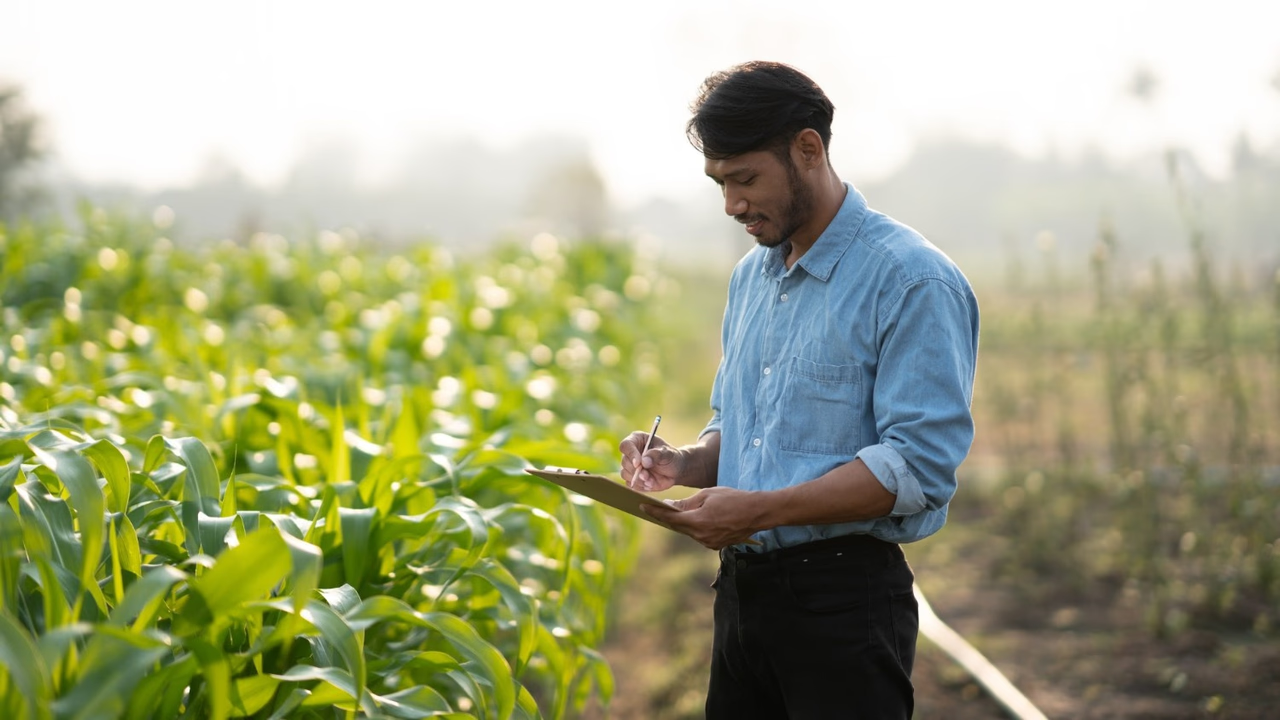


Agriculture is entering a new era where traditional farming knowledge is being strengthened by sensors, automation, connected devices, artificial intelligence, and advanced data analysis. Farmers today face increasingly complex challenges, including unpredictable weather, water shortages, rising input costs, soil degradation, labor constraints, and growing demand for consistent food production. Smart agriculture offers a practical way to address many of these pressures by helping growers make decisions based on accurate, timely information rather than assumptions alone.
At the center of this transformation are technologies capable of observing crops, soil, moisture, temperature, and environmental conditions with remarkable precision. Wave tech is becoming particularly relevant because wave-based systems can support sensing, communication, imaging, and monitoring applications across modern agricultural environments. When combined with cloud platforms, machine learning, GPS, drones, and automated equipment, these technologies can turn farms into highly responsive production systems. The objective is not simply to make farming more technological, but to help farmers use resources more efficiently while improving productivity, resilience, and long-term sustainability.
Understanding Smart Agriculture and Its Core Technologies
Smart agriculture refers to the use of connected and intelligent technologies to monitor farming conditions, analyze information, automate repetitive operations, and improve agricultural decision-making. Instead of treating an entire field as one uniform area, modern systems can identify differences in soil moisture, crop health, nutrient availability, temperature, and pest activity.
Several technologies contribute to this approach:
- Soil moisture and nutrient sensors
- GPS-guided agricultural machinery
- Drone-based crop imaging
- Satellite monitoring
- Automated irrigation systems
- Weather stations and forecasting tools
- Artificial intelligence and machine learning
- Internet of Things connectivity
- Robotic harvesting and field equipment
- Data analytics platforms
The real advantage comes from integrating these technologies. A soil sensor can identify dry conditions, a weather system can estimate upcoming rainfall, and an automated irrigation controller can use both pieces of information to determine whether watering is necessary. This creates a connected decision-making process that can reduce waste while maintaining favorable growing conditions.
How wave tech Is Supporting Modern Agricultural Operations
Agricultural environments require reliable methods for collecting and transmitting information across large areas. Fields can cover hundreds or thousands of acres, making conventional monitoring methods time-consuming and expensive. Wave tech can contribute to this challenge through sensing and communication applications designed to gather information from agricultural environments.

Wave-based technologies can support the detection of physical and environmental characteristics without requiring farmers to inspect every part of a field manually. Depending on the application, electromagnetic, radio, acoustic, or other forms of wave-based sensing can provide information about moisture, crop structure, environmental conditions, and equipment performance.
This capability becomes especially useful when farms combine multiple data sources. A farmer could potentially use sensor information alongside aerial imagery and weather data to identify areas requiring attention. Instead of applying identical treatments throughout a field, management decisions can become more targeted.
The result is a shift from reactive agriculture toward predictive agriculture. Farmers can identify developing problems earlier, allocate resources according to actual field conditions, and monitor whether an intervention produces the expected result.
Precision Irrigation: Saving Water Without Sacrificing Yield
Water management is one of the most important areas where smart agriculture can deliver measurable benefits. Conventional irrigation can sometimes result in overwatering because large fields are treated uniformly even when moisture levels vary considerably from one location to another.
Smart irrigation systems use soil sensors, weather information, crop requirements, and automated controls to determine when and where water is needed. Advanced monitoring technologies can provide additional information about field conditions, allowing irrigation schedules to become more precise.
For example, imagine a vegetable farm divided into several management zones. One section may receive sufficient moisture from recent rainfall, while another area remains unusually dry because of soil composition or exposure to sunlight. A connected irrigation system can recognize this difference and adjust watering accordingly.
The benefits may include:
- Reduced water consumption
- Lower pumping costs
- Healthier root development
- Less nutrient runoff
- More consistent crop growth
- Improved drought resilience
Precision irrigation does not mean watering less at all times. It means delivering the right amount of water to the right location at the right time.
Crop Monitoring Becomes More Accurate
Walking through a large farm and visually checking every plant is difficult, particularly during periods of rapid growth. Smart crop monitoring systems can provide farmers with a broader and more detailed picture of field conditions.
Drones equipped with specialized cameras can capture aerial images that reveal variations in plant development. Satellite imagery can provide wider regional observations, while ground-based sensors can offer detailed measurements from specific locations. These systems can work together to identify unusual patterns.
Wave tech can enhance agricultural monitoring by supporting sensing methods capable of detecting information that may not be obvious to the human eye. Changes in vegetation structure, moisture conditions, or other physical characteristics can provide early indicators of crop stress.
Early detection matters because agricultural problems can spread quickly. A small irrigation issue, nutrient deficiency, or pest outbreak may become expensive if it remains unnoticed for several weeks. By identifying unusual conditions earlier, farmers have more opportunities to respond before productivity declines significantly.
AI and Data Analytics Turn Farm Information Into Action
Collecting agricultural data is only useful when farmers can interpret it effectively. Modern farms can generate enormous quantities of information from sensors, machinery, drones, weather stations, and field-management applications. Artificial intelligence helps convert this raw information into practical insights.
Machine-learning systems can examine historical and real-time data to identify patterns. For example, an analytics platform might compare crop performance with soil moisture, temperature, rainfall, fertilizer application, and planting dates. Over time, these comparisons can help identify which conditions are associated with better yields.
Predictive models can also assist with:
- Estimating crop development
- Identifying potential disease risks
- Forecasting irrigation requirements
- Predicting equipment maintenance needs
- Optimizing fertilizer application
- Estimating harvest windows
- Detecting unusual field conditions
The most valuable systems do not replace the farmer’s judgment. Instead, they provide additional evidence that helps farmers make faster and better-informed decisions.
Automated Machinery Improves Efficiency
Labor availability can be a major challenge in agriculture, especially during planting, spraying, and harvesting periods when timing is critical. Smart machinery can reduce the amount of manual work required while improving operational consistency.
GPS-guided tractors can follow precise routes, reducing unnecessary overlap during field operations. Automated equipment can maintain consistent application rates and adjust operations according to field conditions. Robotics is also developing for tasks such as targeted weed removal, crop inspection, and harvesting.
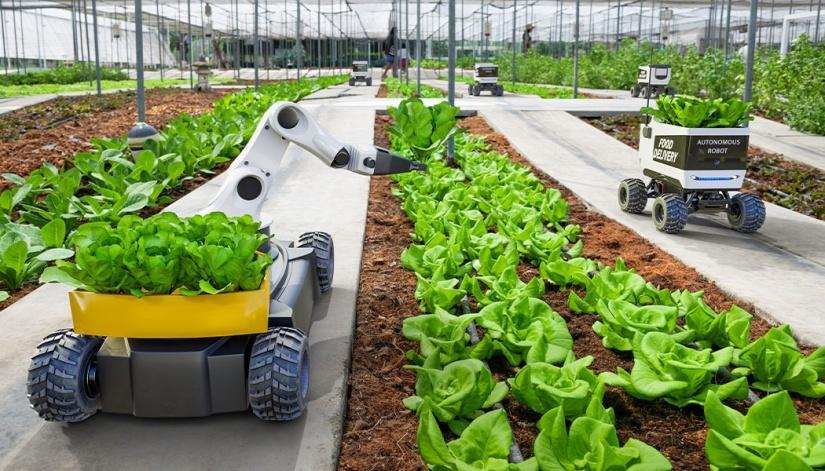
When machinery is connected to farm management systems, operators can collect information about fuel consumption, working hours, field coverage, and equipment performance. This data can reveal where operational improvements are possible.
For smaller farms, complete automation may not always be financially practical. However, individual technologies can still provide meaningful advantages. A farmer might begin with GPS guidance or automated irrigation before gradually adopting additional systems.
Smart Pest and Disease Management
Pests and diseases can significantly reduce agricultural productivity. Traditional pest management often involves routine inspection and treatment schedules, but this approach can sometimes result in unnecessary chemical applications.
Smart agriculture introduces more targeted alternatives. Cameras, sensors, weather information, and predictive analytics can help identify conditions associated with disease or pest development. When a problem is detected, farmers can focus attention on affected areas rather than automatically treating an entire field.
Wave tech may contribute to advanced sensing systems that detect changes in crop or environmental conditions associated with stress. Combined with AI-based analysis, these measurements can support earlier warning systems.
Targeted management offers several potential advantages:
- Lower chemical usage
- Reduced treatment costs
- Better protection of beneficial organisms
- Lower environmental impact
- Faster response to emerging problems
- More accurate field records
This approach supports integrated pest management by making intervention more evidence-based and selective.
A Practical Comparison of Smart Farming Technologies
| Technology | Primary Use | Productivity Benefit | Resource Benefit |
|---|---|---|---|
| Soil Sensors | Monitor moisture and nutrients | Better crop conditions | Reduced water and fertilizer waste |
| Drones | Inspect crops from above | Faster problem detection | Targeted treatments |
| GPS Machinery | Guide field operations | Greater operational accuracy | Less fuel and input overlap |
| AI Analytics | Analyze farm data | Improved decision-making | More efficient resource allocation |
| Smart Irrigation | Automate watering | Consistent crop growth | Reduced water consumption |
| Wave-Based Sensors | Detect environmental or crop conditions | Earlier monitoring | More precise management |
| Weather Stations | Track local conditions | Better timing of farm tasks | Lower weather-related losses |
Building More Sustainable Farms
Productivity and sustainability are no longer separate agricultural goals. Farmers need to produce more food while managing water, soil, energy, and other resources responsibly.
Smart technologies can help achieve this balance by making resource application more precise. Instead of applying fertilizer uniformly, farmers can identify areas that require different treatment. Instead of irrigating on a fixed timetable, they can respond to actual moisture conditions. Instead of inspecting every plant manually, they can prioritize areas where data indicates potential problems.
wave tech can support this broader sustainability strategy by enabling advanced monitoring and sensing capabilities. Better information can lead to fewer unnecessary inputs, reduced waste, and more efficient use of machinery.
Sustainability also involves maintaining healthy soil. Precision agriculture can help farmers avoid excessive fertilizer application, reduce unnecessary field traffic, and make better decisions about crop rotation and soil management. Over several growing seasons, these improvements can contribute to healthier and more productive agricultural systems.
Challenges Farmers Need to Consider
Despite its potential, smart agriculture is not a universal solution that can be implemented without planning. Farmers may encounter several barriers when adopting advanced technologies.
Initial investment is one of the most obvious challenges. Sensors, drones, connected machinery, software platforms, and communication systems can require substantial spending. Small farms may need to prioritize technologies that deliver the clearest return on investment.
Connectivity can also be difficult in remote agricultural areas. A sophisticated monitoring system is less useful if data cannot be transmitted reliably. Farmers may also need training to interpret dashboards, manage devices, and maintain connected equipment.
Other considerations include:
- Data security and ownership
- Equipment compatibility
- Maintenance requirements
- Technical support
- Battery and power availability
- Staff training
- Integration between different platforms
- Long-term operating costs
Successful adoption therefore requires more than purchasing technology. Farmers need a clear strategy that connects each technological investment to a specific operational goal.
The Future of Data-Driven Farming
The next generation of agriculture is likely to become even more connected. Sensors will become smaller, more energy-efficient, and increasingly capable of collecting detailed information. Artificial intelligence will improve its ability to interpret complex agricultural patterns, while autonomous machinery may take on more repetitive field operations.
Future wave tech applications could contribute to higher-resolution environmental sensing, improved communication between agricultural devices, and more sophisticated monitoring systems. When combined with edge computing, AI, satellite data, and robotics, these technologies could enable farms to respond to changing conditions almost immediately.
Imagine a farm where sensors continuously monitor soil conditions, drones inspect crop development, weather systems forecast localized changes, and automated machinery responds to recommendations generated by an intelligent platform. The farmer remains in control but receives a constantly updated picture of what is happening across the operation.
Such systems could make agriculture more precise, adaptive, and resilient, particularly as producers face climate variability and increasing pressure to use resources efficiently.
How Farmers Can Begin the Transition
Adopting smart agriculture does not require transforming an entire farm overnight. A phased approach is often more practical.
Farmers can begin by identifying their most expensive or inefficient processes. If water consumption is the main concern, smart irrigation may provide the strongest starting point. If labor is the biggest challenge, GPS-guided equipment or automation could be more valuable.
A practical implementation process can include:
- Identify a specific farming problem.
- Measure current costs and performance.
- Select technology that directly addresses the problem.
- Test the system on a manageable area.
- Compare results with traditional practices.
- Train workers and operators.
- Expand successful solutions gradually.
- Review performance after every growing season.
This method reduces unnecessary spending and allows farmers to learn from real-world results. Technology should serve the farm’s needs rather than becoming an objective by itself.
Conclusion
Smart agriculture is changing how farmers understand fields, manage resources, monitor crops, and plan daily operations. Instead of relying entirely on fixed schedules and visual inspection, producers can use real-time information to make decisions that are more precise and responsive.
From intelligent irrigation and automated machinery to AI-driven analytics and advanced crop monitoring, these innovations can improve productivity while helping farms reduce unnecessary resource consumption. wave tech adds another layer of opportunity by supporting sensing, communication, and monitoring capabilities that can make agricultural systems more aware of changing conditions. The future of farming will not depend on technology alone. Successful agriculture will continue to require experience, practical knowledge, careful observation, and sound decision-making. Technology simply gives farmers better tools to apply those strengths.